
Salala Incident Impact on US-Pakistan Relations and Future Foreign Policies
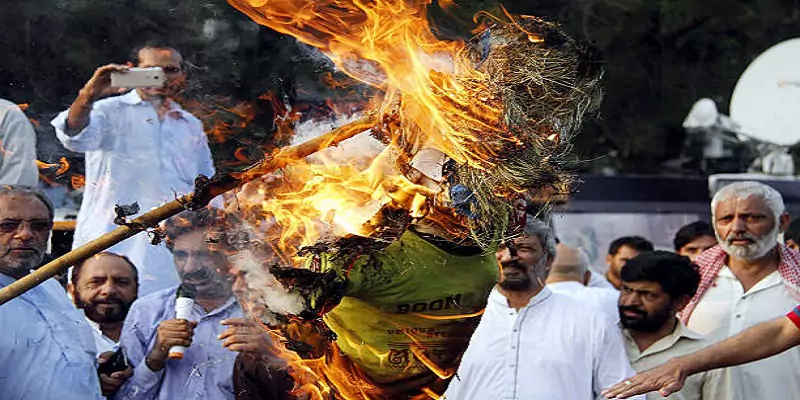
The Salala Attacks are attacks launched against Pakistani military bases by Pakistani army bases in the hands of US forces. It was the most tragic incident in the history of Pakistan, in which the most powerful institution of our nation was attacked with a ferocious force by a foreign force. On 26 November 2011, NATO forces attacked the Pakistan-Afghan border with two checkpoints for the military, which murdered Pakistani military personnel randomly. The incident brought both nations' relations to the brink of a crisis. The consequences of the incident will be felt in the future and affect the foreign policies of both nations. Each country had its own perspective and reasons for the incident. The context of the event must be understood to understand the nature and ramifications of this incident. A strong reaction from Pakistani citizens was observed. The thwarted NATO supplies route, the evacuation of Shamsi base by NATO forces, the demand for Pakistan's apology, intransigence from US officials, threats of the US to hinder Pakistan's aid, the reopening of the NATO supplies routes, and the proposal for ending the Afghan War—all of these are significant issues that relate to this incident. This incident has affected the relations between the two nations, and much progress is evident in this area.
The ties between Pakistan and America are long-standing, dating back to the inception of Pakistan's history. Pakistan decided to be an ally of the USA when it joined the American bloc. Changed through many twists and turns, and the process of making and breaking has continued. The most significant change occurred in the 21st century, particularly with the events of 9/11. Pakistan and America were staunch allies in the War on Terror after the tragedy of 9/11. Pakistan aided the US-led forces in eliminating the terrorist groups from Afghanistan in 2001 when America declared war on Afghanistan. Following that, Pakistan is in a state of constant war, turmoil, and chaos as a consequence of putting herself in the wrath of the war. In the aftermath of this war, Pakistan is suffering psychologically, economically, and in many other aspects. But the other country has been an unsatisfied ally. The problem was worsening each day due to this perpetual war, designed to get us off on the wrong footing and ruin prospects for our nation. The arduous struggle has proven difficult for both countries, and this could be why the desire to end the war is leading the US to make unwise choices similar to this.
Salala is the title given to one of the mountains situated in the northern frontier of Pakistan, where two army checkpoints, "Boulder" and "Volcano," were brutally attacked by NATO forces. The atmosphere of suspicion and deceit is evident following the Salala incident in the country that was affected, that is, Pakistan. The friendship between the leaders of both countries grew into anger. The constant dispute started following the incident. The story of the friendship between the US and Pakistan took a new direction and ultimately led to a tense and embarrassing situation. Following the attack, 24 soldiers from the Pakistan military were shot dead, including a major and a captain. An outrage was heard from all across the nation. The act of the US was viewed as a savage strike against the sovereign rights of Pakistan. The entire country was shaken by anger and fury at this horrific act of US forces, which resulted in deteriorating relations between the two nations. The Salala incident would be noted as a crucial issue in determining the future direction of the foreign policies of both nations.
Nation. The incident under discussion was justified and explained by the governments of Pakistan and the US. The US policy on this issue is that they have been informing authorities of the possibility of an attack on Taliban hideouts and were given the green light by the Pakistan army to start an attack. However, Pakistani authorities maintain that they are completely in denial of this and claim that the NATO government is compromising their sovereignty. In the sense that American government officials were concerned, they could not provide an adequate explanation on this issue, and no apology was offered. Pakistan, however, suffered a lot of damage from the uncontrollable act of America and insisted on its demand that America provide an explanation in full and apologize to Pakistan for its insanity. To protest against the American government's terrible decision, the Pakistani government cut off the supply route for NATO troops to Afghanistan, which was 87 percent over the cost of the previous one. The incident shook Pakistan with anger and controversy and was seen as an attack on the country's sovereignty.
Pakistan's response was characterized by a variety of unorthodox initiatives, including the removal of the Shamsi base in Baluchistan, which was transferred to NATO forces to carry out operations in the fight against Afghan militants; the elimination of drone attacks within Pakistani territory; the boycott of the Bonn conference on 5 5 December 2011, held on the Afghanistan issue; refusing to be a part of Afghan strategies for an exit; and the resolution of border disputes with Afghanistan. The government initiated these initiatives to demonstrate its opposition to the US government. There were numerous negotiations in the aftermath to put things forward, as countries required mutual assistance to negotiate more favorable arrangements. Then, on 3 4 July 2012, when the US State Secretary, John Kerry, officially apologized to its first non-NATO allies, the supply routes were opened, and a consensus was reached.
When resuming the discussion, the Salala incident is a crucial factor in the relations between Pakistan and the US. The incident damaged the relationship between the countries, but after weighing the advantages and disadvantages, a convergence was created. However, this incident has had a devastating impact on the lives of both nations, and the actual motives and mindset of the other are now clear. Additionally, future foreign policy will be formulated in the context of this event.