
U.S.-Pakistan Addressing Economic Shortfalls in the Early Years
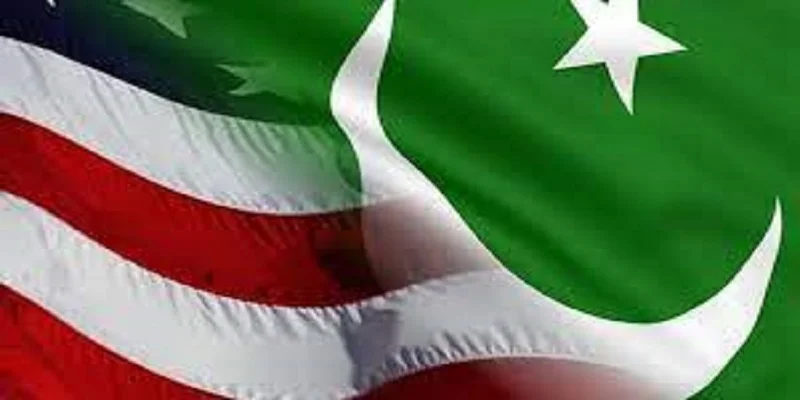
After Pakistan’s creation, the new state faced immense challenges in building a functioning government, infrastructure, and economy. It struggled with severe shortages of essential goods and services. During this period, Pakistan’s survival depended on foreign, especially financial, aid to address infrastructure and economic crises. As it sought assistance, Pakistan found itself geopolitically vulnerable.
In 1947, Pakistan’s formation coincided with the post-World War II and emerging Cold War era. The world was split into two ideological blocs led by the U.S. and the Soviet Union, both competing for influence over newly independent nations. As Cold War rivalry intensified, the U.S. and USSR sought to draw emerging states into their spheres. Pakistan, newly independent, was pivotal between these powers.
Pakistan-U.S. relations in the early years were shaped by Cold War geopolitics. The U.S. prioritized containing communism and expanding its capitalist bloc, while Pakistan needed economic and military aid to stabilize. This mutual interest forged a strong relationship that evolved over time.
The first significant shift in U.S.-Pakistan relations came after General Ayub Khan’s rise in the late 1950s. Ayub Khan’s government reviewed military and economic policies, shaping ties with the U.S. His reforms prioritized military strength, appealing to the U.S. at the Cold War’s height. The Korean War in the early 1950s further solidified the need for Pakistan’s cooperation to contain communism regionally.
Another factor bringing the U.S. and Pakistan closer was the shift under President Eisenhower. The U.S. administration became more aggressive against communism, embracing containment and expanding influence in Asia, Africa, and Latin America. Strategically located, Pakistan became a valuable U.S. ally against Soviet expansion, receiving economic and military aid in return for aligning with American policy.
Cooperation between the U.S. and Pakistan grew, culminating in several high-level visits. A milestone in March 1959 was the formal military aid agreement, enabling Pakistan to receive direct assistance vital for defense during regional instability. The U.S. also provided additional grants to support Pakistan’s fragile economy.
In the 1950s and early 1960s, Pakistan was a major recipient of U.S. aid. From 1950 to 1962, the U.S. provided over $630 million in direct aid, plus $670 million for defense. This support greatly impacted Pakistan’s development, especially in infrastructure like transportation, telecommunications, and the military, helping establish a foundation for national growth.
This reliance on foreign aid had significant long-term effects on Pakistan’s economy and foreign policy. While initial aid addressed urgent challenges, it fostered a lasting dependence that has persisted. Continued reliance, particularly on the U.S., eroded Pakistan’s political and economic independence, as aid often came with political and military conditions conflicting with national interests.
Over time, dependence on U.S. aid proved a double-edged sword. While aid enabled Pakistan to build vital infrastructure, it increased the influence of external powers over domestic and foreign policy. This reliance affected Pakistan’s sovereignty, making it beholden to donor interests.
The effects of aid dependence persist in Pakistan today. Reliance on external assistance has impeded the development of a self-sustaining economy. Conditions attached to aid have restricted independent foreign policy, and this ongoing dependence has stifled growth of domestic industries and infrastructure.
Although initially beneficial, the U.S.-Pakistan relationship has been marked by contradictions. Despite substantial aid, Pakistan has faced economic stagnation, political instability, and lack of self-sufficiency. Aid dependence perpetuates a cycle: each round addresses immediate needs without resolving underlying challenges.
This aid dependency has undermined Pakistan’s ability to develop a sustainable, diversified economy. Instead of investing in long-term projects, the country has often chosen short-term fixes. This pattern has prevented economic independence hoped for at independence.
Additionally, aid conditions have often shaped Pakistan’s foreign policy decisions to align with donor interests over national priorities. This dynamic influenced political and economic choices, prioritizing foreign relations over building domestic strength.
In conclusion, U.S.-Pakistan relations, beginning with 1950s aid, have strongly influenced Pakistan’s development. Initial assistance addressed urgent needs but created long-term dependence, hindering self-sufficiency and independent foreign policy. Despite substantial aid, Pakistan continues to struggle with economic instability and foreign dependence. Aid legacy remains a central challenge as Pakistan maneuvers complex domestic and international politics.