Pakistan and Saudi Arabia Sign Strategic Defence Pact

  • Pakistan and Saudi Arabia Sign Strategic Defence Pact
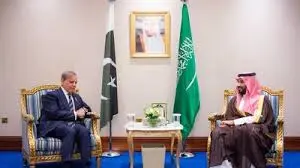
Pakistan and Saudi Arabia have recently signed a historic Strategic Defence Pact, which has caused heated discussions in local and international arenas. This pact is being reviewed as one of the most crucial events of modern years in relation to Pakistan's foreign policy and defence posture. At the heart of the pact is a statement that an attack on one country would be considered an attack against the other, providing for collective security. It is not only deepening bilateral relations but also heralding a change in the broader strategic configuration of South Asia and the Middle East.

Pakistan’s link with Saudi Arabia is nothing new. Both nations have enjoyed centuries of political, economic, and military cooperation along with religious connection. Saudi Arabia has been one of Pakistan’s closest economic partners, offering aid and oil supplies for years, while Pakistan has historically provided military assistance and training—and even deployed troops to the challenging southern border region upon request from Riyadh. So the new defence pact is less surprising but potentially more significant by formalizing commitments that were previously ad hoc.

The agreement is said to include several sectors. Outside the mutual defence guarantee, it allows far greater intelligence cooperation, more comprehensive training, and increases the number of joint military exercises. Pakistan has one of the largest and most battle-hardened militaries in the Muslim world, for its part; Saudi Arabia has huge financial resources and sophisticated defense purchasing power. Combining their strong points is expected to produce a powerful synergy that will give potential enemies pause and contribute to maintaining peace and stability in both of their regions. Economic cooperation is also indirectly linked to the accord, as a secure security environment is necessary for continued investments, in particular in the field of energy and infrastructure.

Both had easy justifications for why they pursued this agreement. For Pakistan, closer relations with Saudi Arabia are not just about injecting some much-needed cash and diplomacy back into the system but also about a certain degree of confidence and security—in a region that remains deeply fraught. Pakistan has been facing militant violence, border problems with neighboring Afghanistan, and political instability at home. Establishing closer ties to Saudi Arabia underscores to its own people and the world that Riyadh has powerful friends. The deal with Pakistan is just as important for Saudi Arabia. Riyadh wants to broaden its security relationships beyond traditional Western partners. With tensions boiling in the Middle East, where Saudi Arabia is locked in conflict with Iran, Yemen, and other regional wars, it views Pakistan as a steadfast ally of common religious, cultural, and political values.

The regional implications are far-reaching. For South Asia, the pact could present fresh calculations for India, which has its own deepening links with the Gulf. Anyone coming down the pike—Pakistan-Saudi military cooperation being formalized to any extent—is going to be looked at with a jaundiced eye in New Delhi, especially when India needs its own energy deals and investments from the region. It adds a new level of complication for Afghanistan. The pact could be viewed by the Taliban government as a move that boosts Pakistan’s hand in discussions over border fencing and counterterrorism operations. The Middle East, including Iran, will be watching this deal very closely. Pakistan has long tried to navigate a middle path between Riyadh and Tehran, but a formal alliance with Saudi Arabia could make that balancing act much more difficult. At the international level—as well as becoming a major manufacturer in its own right with ambitions to compete on global markets—this deal reflects the slow turn of defense relationships globally, and that US dominance is no longer quite so dominant; something being responded to by other countries with an increased wanting for diversity.

Within Pakistan the reactions are mixed. Defenders of the government consider the defense pact a moment of pride that secures the country’s strategic relevance. They contend that it will bring more investment, improve national security, and make Pakistan look better as a key Muslim power. Meanwhile, critics see some pitfalls. Opposition politicians and analysts have warned that Pakistan could get sucked into Middle Eastern wars where its interests are not apparent. There is also the question of defence pacts and those that believe, while they may appear solid on paper, often have financial obligations. Pakistan, which is already seeking a bailout from China and has approached the International Monetary Fund earlier this year to avoid default on its international commitments, may struggle to offer the level of cooperation or deployment options or advanced weapons systems that Saudi Arabia might find ideal.

Another major concern is dependency. A binding security commitment with Saudi Arabia means Pakistan could lose all other key allies in the region, including Iran and China, whose geopolitical weight is unfathomably high not only due to their strategic location in South Asia but also because of potential security issues they have from sectarian violence. Skating on the surface of these crosswinds is going to take some skillful diplomacy. Historically, Pakistan has acted as a bridge in the Muslim world and maintained partnerships with both Sunni-majority countries and Shia-majority countries. The deal could restrict its ability to appear as a neutral player in future spats.

Regardless, the long-term picture offers some hope. Handled well, the deal could pave the way for greater collaboration on technology transfer, military modernization, and counterterrorism. The wealth of Saudi Arabia can be pumped into Pakistan’s defense industry, and in return manpower and expertise will flow from Pakistan to KSA. The relationship could go beyond the military to other areas—such as cybersecurity, space technology, and intelligence sharing against organized crime and extremists. On the economic front, a stabilized bilateral relationship might encourage Saudi investors to invest more in Pakistan’s energy, mining, and infrastructure projects.

Looking forward, the agreement promises to dictate a new chapter in Pakistan-Saudi ties. Both countries have plenty of problems at home, yet their showing a united front when the chips are down speaks loudly. How others view you in foreign policy is often as important as what you can do, and the perception now is that Pakistan and Saudi Arabia are joined at the hip. Whether such unity will translate into tangible gains, however, will be contingent on how both countries navigate regional competition and internal constraints.

In the final analysis, the Pakistan-Saudi Arabia strategic defence pact is a bridge that connects history with politics and also future dreams. It cements an already friendly relationship, offers a security blanket at a time of regional insecurity, and boosts the status of both countries globally. It is also not without its dangers. There are real economic pressures, the threat of being sucked into unwanted conflicts, and the difficulty of balancing relations with other powers. What is more certain is that this agreement, and this period of time, will continue to be at the heart of discussions about Pakistan’s foreign and defence policy long after it comes into effect.