
Yousaf Raza Gillani
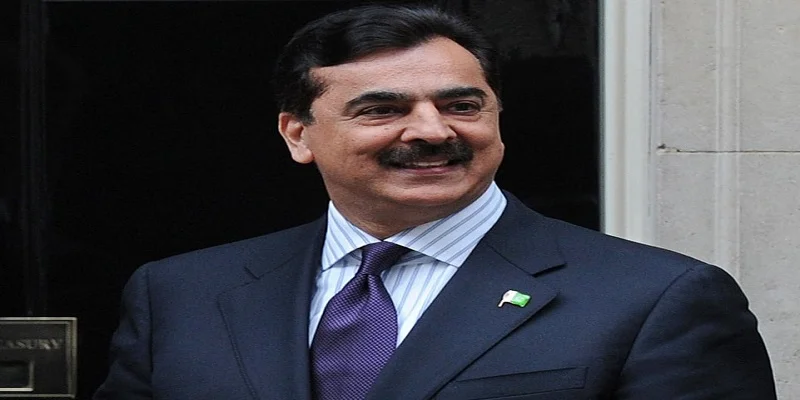
Yousaf Raza Gillani is one of the most recognized names in Pakistan’s political landscape, remembered for his tenure as the country’s Prime Minister and his long-standing association with the Pakistan Peoples Party (PPP). His story goes beyond holding high office, revealing a leader skilled at navigating Pakistan’s turbulent politics, balancing party loyalty and personal legacy, and forging consensus within an often-fractured democracy.
Born on June 9, 1952, in Multan, Gillani came from an influential Sufi family with deep political roots. The Gillanis of Multan have historically been integral to the city’s religious and social fabric, with ties that span centuries of spiritual leadership. This background gave Yousaf Raza Gillani not only a sense of identity but also a platform from which he could step into public life. From the outset, his political career was closely tied to the traditions of loyalty, regional influence, and service to the people of South Punjab.
Gillani’s first major steps in politics were taken under the banner of the Pakistan Muslim League during the era of General Zia-ul-Haq. Like many politicians of that period, he initially worked within the system to establish himself. However, he would later part ways with the Muslim League and join the PPP under Benazir Bhutto, a move that defined the rest of his political career. His shift to the PPP was not just a change of party but also a sign of ideological alignment. The PPP’s populist platform and Bhutto’s charismatic leadership appealed to Gillani, who sought to connect his personal influence in Multan with a national vision.
Over the years, Gillani held different roles, gaining experience in both governance and party politics. He served as the Speaker of the National Assembly during the 1990s, where his fair handling of parliamentary proceedings earned him respect across party lines. This reputation for being a consensus builder and a calm voice in heated debates followed him throughout his career. For many, Gillani symbolized the softer, diplomatic side of Pakistani politics, a contrast to the confrontational style of many of his peers.
His defining moment came after the 2008 general elections when the PPP emerged as the largest party following the assassination of Benazir Bhutto. With the party looking for a candidate who could unite different factions, Yousaf Raza Gillani was chosen as Prime Minister. His appointment was widely seen as a compromise, someone who could work with coalition partners, manage tensions within the PPP, and provide stability after years of political turmoil.
As Prime Minister, Gillani presided over one of the most challenging times in Pakistan’s recent history. The country faced an economy under stress, rising militancy, and tense relations with the United States, particularly after the killing of Osama bin Laden in Abbottabad in 2011. Gillani’s approach was often cautious and rooted in maintaining balance. He sought to strengthen the parliament, regularly emphasizing that sovereignty belonged to the elected representatives rather than unelected institutions. His speeches frequently echoed the PPP’s commitment to democracy, federalism, and civilian supremacy.
Gillani’s government is remembered for initiatives aimed at improving social welfare and giving more power to the provinces. The passage of the 18th Amendment to the Constitution was a landmark during his tenure. This amendment devolved greater authority to the provinces, strengthening the federal structure and addressing long-standing grievances about centralization. For many, this was one of the PPP government’s greatest achievements, and Gillani played a crucial role in ensuring its passage by working closely with coalition partners and opposition parties.
At the same time, his government frequently faced criticism for governance challenges, corruption allegations, and struggles to manage energy shortages, which frustrated ordinary citizens. The public perception of inefficiency, combined with political opposition and judicial activism, created an environment where Gillani was constantly under pressure. His administration faced frequent clashes with the judiciary, particularly over the issue of writing a letter to Swiss authorities to reopen graft cases against President Asif Ali Zardari. This conflict ultimately led to Gillani’s disqualification in 2012 when the Supreme Court declared him ineligible to hold office after he was convicted of contempt.
His removal was unprecedented, marking the first time in Pakistan’s history that a sitting Prime Minister was disqualified by the judiciary. Supporters of Gillani saw this as judicial overreach, while his critics framed it as a necessary step for accountability. Either way, it underscored the fragility of democratic continuity in Pakistan and highlighted the enduring power struggles between different state institutions.
After stepping down, Gillani continued to remain active in politics, both as a senior leader of the PPP and as a symbol of resilience for the party. Though his political influence declined somewhat after leaving the Prime Minister’s office, he retained his stature as a respected figure within the PPP and among his constituents in Multan. His family also continued to play a role in politics, with his sons entering the political arena and carrying forward the Gillani name.
Gillani reemerged on the national scene when he was elected to the Senate in 2021. His victory for the Senate seat from Islamabad, achieved in a closely watched contest against the ruling party’s candidate, reminded many that he remained a force in parliamentary politics. For the PPP, his win was both symbolic and strategic, signaling that the party could still outmaneuver its opponents through alliances and political acumen.
What makes Yousaf Raza Gillani’s story significant is the way it reflects the broader currents of Pakistan’s political journey. His career reflects the challenges of building democracy in a country where institutions often clash, where politicians must navigate a fine line between ideals and practical compromises, and where loyalty to party and principles is continually tested by power struggles.
Gillani may not be remembered as a transformative reformer, but his legacy lies in his persistence, his ability to unite different voices, and his steady commitment to parliamentary democracy. His time in office demonstrated the limits of civilian authority, but also highlighted the possibilities of leadership that values consensus over confrontation. In many ways, Gillani’s career is a reminder that in Pakistan’s political theater, endurance is often as important as ambition, and survival itself can become a form of achievement.
Yousaf Raza Gillani remains a figure who continues to draw attention, whether as a reminder of the PPP’s years in power or as a seasoned politician still actively engaged in the political arena. His story is far from over, and his influence remains an integral part of Pakistan’s ongoing democratic narrative.