
Third Battle of Panipat
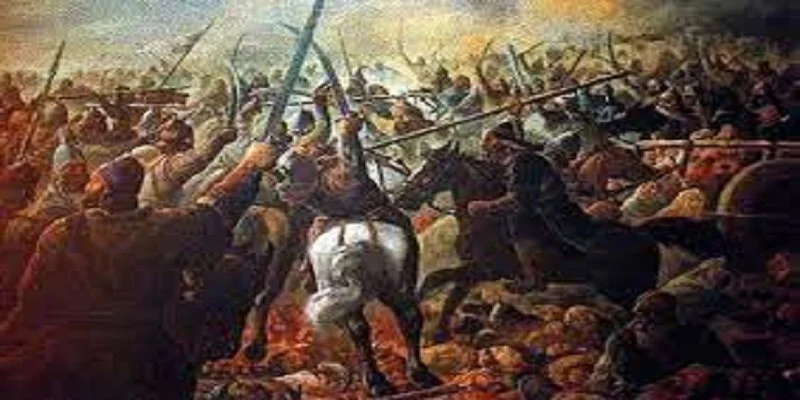
The Third Battle of Panipat, fought on January 14, 1761, remains one of the most decisive and bloodiest battles in Indian history. It was fought between the Maratha Empire and the Durrani Empire under Ahmad Shah Durrani, also known as Ahmad Shah Abdali. The clash took place in Panipat, located in present-day Haryana, India, and it changed the political balance of power in the subcontinent. This battle not only brought two of the strongest powers of the 18th century face-to-face but also left behind far-reaching consequences for both empires and the future of India.
The Maratha Empire emerged as the most powerful force in India following the decline of the Mughal Empire. By the mid-18th century, the Marathas had established their influence over large parts of the country, from the Deccan to the north. Their armies were well-trained, disciplined, and equipped with modern artillery. Sadashivrao Bhau, the commander-in-chief of the Marathas, led their forces with the ambition of securing complete dominance over northern India. The Marathas had earlier defeated the Mughals and replaced them as the dominant political power, but their expansion also made them rivals of other regional powers. Their growing presence in northern India directly challenged the ambitions of Ahmad Shah Durrani, who had already made multiple invasions into India.
Ahmad Shah Durrani, founder of the Durrani Empire, was a seasoned warrior and strategist. After the decline of the Mughal Empire, he saw northern India as an opportunity to expand his influence. He had already invaded India several times, looting Delhi and gaining vast wealth. His earlier campaigns had made him a formidable figure, feared both for his military tactics and his ruthless efficiency. In 1757, his forces had inflicted heavy losses on the Marathas, deepening the enmity between the two sides. By 1760, it became clear that the next confrontation would decide who controlled the northern plains of India.
The Maratha army that marched toward Panipat was massive, numbering around 100,000 men. It included large cavalry units, infantry, artillery, and camp followers. Sadashivrao Bhau also brought along important leaders such as Vishwasrao, the Peshwa’s son, and other influential nobles. The Marathas had confidence in their numbers and in their superior artillery. They also had support from some regional allies, although their alliances were not as stable as they appeared. On the other side, Ahmad Shah Durrani led an army of about 60,000 men, composed largely of Afghans, Baloch, and his trusted cavalry. He was also joined by allies like Najib-ud-Daula and Shuja-ud-Daula, who had their own interests in opposing Maratha expansion. The Durrani forces, though smaller in size, were better coordinated and led by a general with vast battlefield experience.
As the armies gathered at Panipat, the situation became tense. The Marathas had extended supply lines and faced shortages of food and resources, while the Durrani forces managed to cut off routes and isolate them. Despite this, Sadashivrao Bhau decided to confront the enemy directly. On January 14, 1761, the Third Battle of Panipat began at dawn.
The Marathas launched the initial attacks with their artillery and cavalry charges, trying to break through the Afghan lines. For hours, the battlefield was filled with fierce combat, heavy cannon fire, and relentless charges. The Afghan forces, however, stood their ground. Ahmad Shah Durrani positioned his troops strategically, keeping reserves ready to exploit any weakness in the Maratha formation. The Afghan cavalry proved more mobile and effective in countering the Maratha charges. Despite their numerical strength, the Marathas struggled to coordinate their massive army.
The battle turned into a brutal contest of endurance. Both sides suffered heavy casualties, and the field was littered with dead and wounded. For the Marathas, the biggest blow came when their leader, Sadashivrao Bhau, was killed in combat. His death shattered the morale of the Maratha soldiers. Confusion spread quickly through their ranks, and discipline broke down. Ahmad Shah Durrani seized this moment and ordered a full-scale assault. The Afghan cavalry and infantry overwhelmed the disorganized Marathas, leading to one of the bloodiest routs in Indian history.
By the end of the day, the Maratha army was completely destroyed. Historians estimate that between 70,000 and 100,000 soldiers and civilians were killed in the battle, making it one of the deadliest clashes of the 18th century. The Marathas lost not only their commander but also many of their senior leaders and nobles, leaving the empire politically weakened. The Third Battle of Panipat marked the end of Maratha dominance in northern India for a long time.
The consequences of the battle were profound. For the Maratha Empire, it was a devastating defeat that halted their expansion and led to internal divisions. The loss of so many leaders and soldiers created a power vacuum within the empire. Although the Marathas eventually regained some influence in later decades, their dream of becoming the supreme rulers of India never fully materialized.
For Ahmad Shah Durrani and the Durrani Empire, the victory was significant but temporary. While he succeeded in defeating the Marathas and asserting his dominance, he did not have the resources to permanently control India. After plundering and imposing his authority, he soon withdrew to Afghanistan. His empire itself began to decline not long after his death, as his successors struggled to maintain unity and control.
The Third Battle of Panipat is remembered as a turning point because it prevented any single Indian power from filling the vacuum left by the Mughals. The Marathas were weakened, the Durranis could not hold on, and the Mughals were already reduced to figureheads. This power vacuum eventually paved the way for the British East India Company to expand its influence in India, ultimately leading to British colonial rule.
Even today, the battle remains a poignant reminder of the consequences of overexpansion, poor coordination, and political disunity. It was a confrontation where courage and numbers were not enough to ensure victory. The leadership of Ahmad Shah Durrani, the tactical mistakes of the Marathas, and the failure of strong alliances combined to decide the outcome of one of the most important battles in Indian history.
The Third Battle of Panipat was not merely a clash between two armies, but a pivotal struggle that profoundly shaped the course of the subcontinent. The bravery of the soldiers, the ambitions of the leaders, and the tragedy of the massive loss of life give this battle a unique place in history. It ended the dream of Maratha supremacy and confirmed Ahmad Shah Durrani’s reputation as one of the most powerful rulers of his time, even though his empire could not sustain its gains. Above all, the battle remains a lesson in how shifting alliances, leadership decisions, and strategy can alter the destiny of nations.