
Dissolution of the First Constituent Assembly
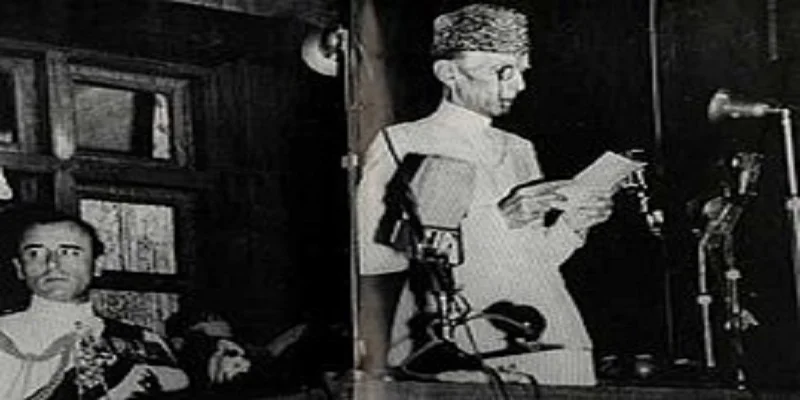
The dismissal of Pakistan’s First Constituent Assembly cannot be understood without considering the larger political backdrop of the early 1950s. Governor-General Ghulam Muhammad and Prime Minister Muhammad Ali Bogra maintained a cooperative relationship, sharing a vision of aligning Pakistan firmly with the Western bloc. Both men believed that Pakistan’s security and economic survival depended on ties with the United States and its allies. Yet, this direction was not universally accepted. Within the country, especially in East Bengal, anti-American and anti-establishment forces were gaining ground, raising alarms for those steering policy in Karachi.
The 1954 provincial elections in East Bengal amplified these concerns. The United Front, a coalition that strongly opposed pro-US policies, secured a sweeping victory. This outcome posed a clear challenge to the ruling establishment. Members of the Constituent Assembly began openly questioning the wisdom of bringing Pakistan into the orbit of American influence. On September 22, 1954, Fazlur Rahman, a former federal minister, issued a public statement warning that close cooperation with the United States could endanger Pakistan’s political independence and economic future, and might even pave the way for a new kind of colonial subjugation. Acting on this sentiment, the assembly took the unprecedented step of proposing a trade delegation to the Soviet Union in an attempt to diversify Pakistan’s foreign relations.
The assembly’s dissent, however, was not limited to foreign policy. Lawmakers were increasingly critical of the governor-general’s growing interference in the government’s daily affairs. They objected to his sweeping discretionary powers, particularly the authority to dismiss ministries at will. While Ghulam Muhammad was away on an official trip to the North-West Frontier Province, the assembly passed an amendment curbing these powers. It was a direct challenge to the authority he had exercised earlier when he removed Prime Minister Khawaja Nazimuddin. Upon learning of the move, Ghulam Muhammad rushed back to Karachi. He immediately began maneuvering to secure allies, reaching out to influential figures such as Ayub Khuhro, Mumtaz Daultana, Fazlul Haq, and Dr. Khan Sahib, and even consulted General Ayub Khan to ensure military support.
With his position reinforced, Ghulam Muhammad struck on October 24, 1954. He dissolved the Constituent Assembly, claiming it had lost the people's trust. He imposed press restrictions to control the narrative and promised fresh elections. Prime Minister Bogra, instead of resisting, endorsed the governor-general’s decision. He accused the assembly of undermining national unity by fostering provincial and personal rivalries. Bogra continued in office, now heading a cabinet that owed its authority not to parliament but to the governor-general’s favor, effectively sidelining representative governance.
The dissolution was met with defiance from the assembly’s president, Maulvi Tamizuddin Khan. Refusing to accept the dismissal, he attempted to convene the already scheduled session of the assembly on October 28, but he and his colleagues were denied entry to the assembly hall. Unwilling to yield, Tamizuddin filed a writ petition in the Sindh Chief Court on November 7, 1954, challenging the governor-general’s action.
On February 9, 1955, the Sindh Chief Court delivered a landmark ruling. It declared the dissolution unconstitutional and affirmed that the governor-general had no authority to dismiss the assembly. Buoyed by this judgment, Tamizuddin convened a meeting of the assembly on March 7. For a moment, it seemed the tide had turned against executive overreach. Yet, Prime Minister Bogra, after consulting Ghulam Muhammad, who was undergoing medical treatment in Paris at the time, decided to appeal the verdict to the Federal Court.
The case now came before Chief Justice Muhammad Munir, whose approach would fundamentally shape Pakistan’s constitutional history. Justice Munir assured the government that the Sindh Chief Court’s ruling would be overturned. True to this prediction, the Federal Court reversed the decision. Instead of addressing the substantive question of whether the governor-general could legally dissolve the assembly, the court focused on a technicality. It argued that Section 223A of the Constitution, under which Tamizuddin had sought relief, was invalid because it had not received the Governor-General’s assent. On this procedural ground, the dissolution was effectively upheld.
The Federal Court’s reasoning drew heavily on what later became known as the “doctrine of necessity.” It was a principle that justified extraordinary actions by state authorities if they were deemed necessary for the survival or stability of the state. This doctrine, introduced in 1955, would echo through Pakistan’s future, repeatedly invoked to legitimize constitutional suspensions, assembly dissolutions, and even military coups.
Not all judges agreed with this outcome. Justice A.R. Cornelius dissented, arguing that the governor-general’s assent was not required for constitutional amendments passed by the assembly. He believed the Sindh Chief Court’s ruling should have been upheld, and that the assembly’s sovereignty had to be protected. Cornelius’s stance highlighted the path not taken in Pakistan’s legal and political development. Had his reasoning prevailed, the supremacy of parliament might have been established at the very outset of Pakistan’s constitutional journey, potentially altering the trajectory of civil-military relations and executive dominance in later decades.
The dissolution of the First Constituent Assembly epitomized a decisive conflict: democratic institutions versus entrenched executive power. Ghulam Muhammad’s actions, supported by Bogra and validated by the Federal Court, weakened parliamentary authority and set a lasting precedent for executive dominance over representative government. This episode demonstrated how foreign policy choices, political rivalries, and power struggles converged to undermine Pakistan’s democratic aspirations at a crucial early stage of its development.
The crisis of 1954 marked a turning point at which parliamentary sovereignty was sacrificed in favor of executive and judicial control. For many historians, the dissolution represented the origin of recurring instability and authoritarian rule in Pakistan. Justice Cornelius’s lone dissent stands as a powerful reminder of the missed chance to enshrine parliamentary supremacy, which could have fundamentally changed Pakistan’s constitutional path.