
Bashir Ahmad Bilour
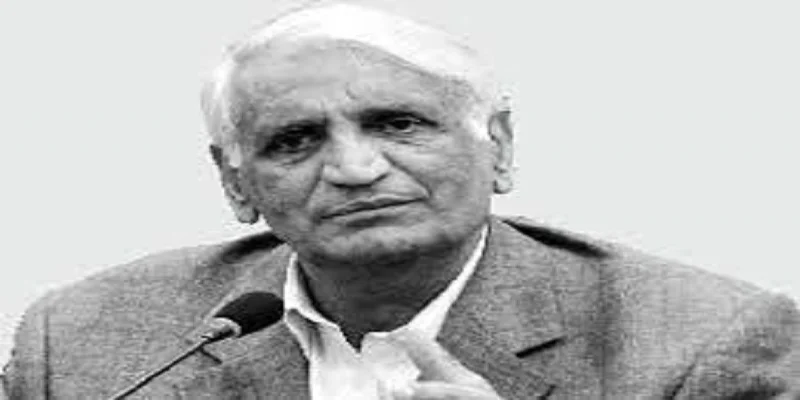
Bashir Ahmad Bilour was one of those rare political figures who left behind more than just policies, speeches, and political campaigns. He left behind a legacy of resilience and courage that continues to resonate in Pakistan’s political and social history. His life story reflects not only the struggles of one man but also the broader narrative of a nation grappling with violence, instability, and the challenges of democracy. Remembered as much for his personal bravery as for his role in politics, Bilour’s journey is worth revisiting to understand the cost of leadership in turbulent times.
Born in Peshawar in 1943, Bashir Ahmad Bilour belonged to a respected family that had long been associated with the politics of the North-West Frontier Province, now Khyber Pakhtunkhwa. He was part of the prominent Bilour family, which has produced several politicians and businessmen who have shaped both the economic and political landscapes of the province. Unlike some politicians who entered politics purely for influence, Bilour’s career was marked by a deep sense of duty. He represented the Awami National Party (ANP), a party rooted in the nationalist traditions of Bacha Khan, promoting peace, tolerance, and democracy. For him, politics was never about opportunism. It was about standing up for principles, even in the face of danger.
Bilour’s political career officially began in the 1970s, but his impact became most visible in the 1980s and 1990s when the ANP struggled to assert itself against powerful rivals and turbulent regimes. He served as a member of the provincial assembly several times and earned respect for being accessible, straightforward, and unwavering in his convictions. He was the type of politician who was always among the people rather than behind the walls of secure offices. This connection with ordinary citizens is what made him one of the most popular leaders in Peshawar and beyond.
The 2000s marked a particularly challenging era for Bilour and his party. The rise of militancy and terrorism across Khyber Pakhtunkhwa turned the region into one of the most dangerous political battlefields in the world. The ANP, with its secular and nationalist ideology, became a prime target of extremist groups who saw its message of democracy and peace as a direct threat. Leaders of the party were threatened, attacked, and assassinated. In this hostile environment, many politicians opted to remain silent, avoid public gatherings, or retreat into security bubbles. Bashir Ahmad Bilour chose the opposite path. He refused to step back. He refused to compromise with fear.
Bilour openly declared that he would never wear a bulletproof vest or surround himself with heavy security. He often told friends and colleagues that death comes when it is destined and that it was his duty to remain among the people, not hide from them. This stance earned him admiration but also worried those close to him. His bravery was almost defiant, a statement that he would not allow terrorists to dictate the way politics should be practiced. He was targeted multiple times in attacks but survived, each time returning to political work with the same determination. His presence became a symbol of resistance, not just for his party but for ordinary citizens who felt suffocated by the violence around them.
The tragic climax of his journey came on December 22, 2012, in Peshawar, when a suicide bomber targeted a political meeting he was attending. The attack killed him along with several others. His death sent shockwaves across Pakistan, not just because of the loss of a senior leader but because it felt like the silencing of a voice that had consistently spoken out against extremism without hesitation. The country mourned, and even his political opponents acknowledged that his courage had set him apart from others. For the people of Peshawar, the loss was personal. They had lost not just a leader but a man who had walked their streets, shared their sorrows, and stood beside them in difficult times.
The legacy of Bashir Ahmad Bilour lives on in multiple ways. Politically, he reinforced the idea that standing up to violence requires moral courage. He showed that leadership is not measured by power or wealth but by the willingness to face danger for the sake of one’s principles. His assassination underscored the dangers politicians face in Pakistan, where challenging extremist ideologies can come at the highest cost. Yet his example continues to inspire future generations of leaders within the ANP and beyond. His family also carries forward his political mission, keeping alive the traditions of service and resilience that defined his career.
For many, Bilour’s life is a reminder that the fight against terrorism and extremism is not just fought on battlefields by soldiers but also in the public sphere by civilian leaders. His refusal to compromise or give in to threats showed the world that courage in politics is possible, even in the darkest times. It also highlighted the importance of political voices that resist hatred and advocate for peace, no matter how hostile the environment may be.
Looking back, one can say that Bashir Ahmad Bilour’s life was a story of conviction. He was not perfect, and like every politician, he had his critics. Yet even those who disagreed with his politics rarely doubted his sincerity. In an era where many leaders prioritize personal gain, Bilour’s story stands out as a poignant reminder that leadership can still be about sacrifice and principle. His name is etched in the political history of Pakistan, not just as a victim of violence but as a symbol of resilience in the face of it.
Today, when people recall Bashir Ahmad Bilour, they remember a man who lived fearlessly, placing duty above personal safety and embracing the risks that came with standing up for what he believed in. His story is one of loss but also of inspiration, proof that even in times of uncertainty, voices of courage can rise and leave behind a legacy that outlasts violence. Bashir Ahmad Bilour may no longer be alive, but the example he set continues to echo in Pakistan’s ongoing struggle for peace, democracy, and hope.