
Measures taken by Ayub Khan
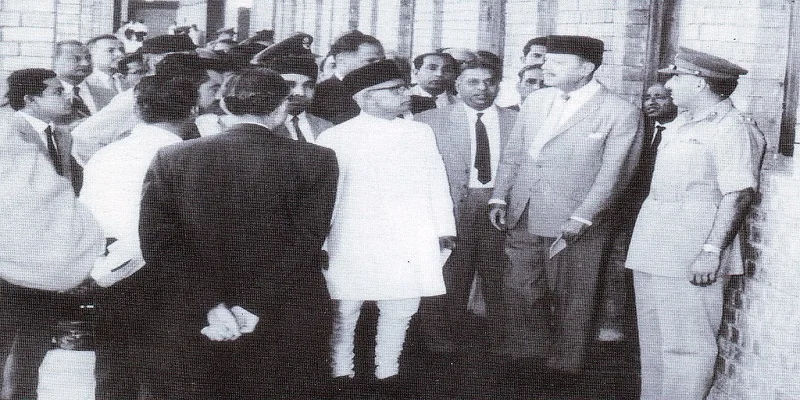
Muhammad Ayub Khan, widely known as Ayub Khan, was one of the most influential figures in Pakistan's political history. Serving as the second President of the country from 1958 to 1969, Ayub Khan’s tenure was marked by significant political, economic, and social changes. He rose to power through a military coup in 1958, overthrowing the government of President Iskander Mirza. This military intervention came at a time when Pakistan was grappling with political instability, economic challenges, and widespread social unrest. Many supporters viewed Ayub Khan’s rise as a necessary measure to stabilize the country, while critics argued it marked the beginning of military dominance in Pakistani politics. Over the years, Ayub Khan implemented a series of policies and reforms that left a lasting imprint on Pakistan’s governance, economy, and society. These measures, although ambitious, yielded mixed outcomes and sparked debates that continue to shape discussions on Pakistan’s political history.
Ayub Khan assumed leadership during a period of deep uncertainty. The country’s civilian governments were struggling to manage economic instability and political fragmentation, and there was growing concern over social inequalities and unrest in rural areas. Against this backdrop, Ayub Khan’s military-led takeover was portrayed as a corrective step to address administrative inefficiency and corruption. His regime emphasized centralized governance and attempted to modernize the country’s infrastructure, economy, and educational system. The era of Ayub Khan, therefore, was not only characterized by military rule but also marked by attempts to accelerate development, industrialization, and modernization in Pakistan.
One of Ayub Khan’s landmark initiatives was land reforms. The agrarian sector played a central role in Pakistan’s economy, yet land ownership was highly concentrated in the hands of a few elite landlords. Ayub Khan’s government introduced the Land Reforms of 1959, which sought to redistribute agricultural land to landless peasants and reduce socio-economic disparities. While the reforms were intended to empower small farmers and improve rural livelihoods, their implementation faced significant challenges. Resistance from powerful landowners and loopholes in the policy meant that large landholdings often remained intact, and the intended impact was only partially realized. Despite these limitations, the land reforms did contribute to some redistribution of wealth and increased awareness of rural inequalities, laying the groundwork for future discussions on agrarian reform in Pakistan.
Ayub Khan also prioritized economic policies that focused on industrialization and modernization. His government introduced the Second Five-Year Plan in 1960, with a focus on infrastructure development, agricultural productivity, and industrial expansion. The policies aimed to attract foreign investment and boost Pakistan’s economic growth. Significant progress was made in building factories, roads, and energy projects, which contributed to an increase in industrial output. However, the benefits of economic growth were unevenly distributed. The urban areas, particularly in West Pakistan, experienced rapid development, while rural regions lagged behind. This uneven growth led to regional disparities, fueling political discontent in certain parts of the country. Nevertheless, Ayub Khan’s economic reforms laid the groundwork for the first phases of Pakistan’s industrial economy and enhanced the country’s presence in global markets.
Education and technological advancement were also central to Ayub Khan’s vision for Pakistan. His government recognized the importance of improving literacy rates and expanding access to education, especially at the primary and secondary levels. Efforts were made to establish more schools and promote technical education to equip the youth with skills for the modern economy. Additionally, Ayub Khan invested in scientific and technological development, resulting in the establishment of institutions such as the Pakistan Atomic Energy Commission. These initiatives aimed to position Pakistan as a modern nation capable of competing internationally and addressing its developmental challenges. While progress was evident in these sectors, critics argued that educational reforms were insufficient and did not fully address rural education or gender disparities in access to learning.
Another significant aspect of Ayub Khan’s tenure was his focus on constitutional reforms. In 1962, he introduced a new constitution, replacing the 1956 Constitution. The 1962 Constitution established a presidential system of government, centralizing power in the office of the President. This shift aimed to bring political stability and reduce the frequent governmental changes that had plagued the country. Additionally, Ayub Khan introduced the system of basic democracies, intended to decentralize administration and involve local communities in governance. However, critics viewed these measures as tools to strengthen authoritarian rule, limiting democratic freedoms while consolidating power in the executive branch. The constitutional reforms highlighted the tension between development-oriented governance and political inclusivity, a debate that continued long after Ayub Khan’s era.
Ayub Khan’s foreign policy also had a significant impact on Pakistan’s geopolitical position. During his presidency, Pakistan maintained a close alliance with the United States, which was particularly important during the Cold War period. The partnership provided Pakistan with substantial economic and military assistance, contributing to domestic development and enhancing its defense capabilities. This alliance was also strategically important in the regional context, especially in relation to India and the ongoing Indo-Pak conflicts. While the relationship with the United States helped Pakistan gain international support, it also made the country dependent on foreign aid, which had long-term implications for economic and diplomatic independence.
The social impact of Ayub Khan’s policies was complex. On one hand, his economic programs led to the rise of a new middle class, increased industrial employment, and the modernization of urban centers. On the other hand, there was criticism regarding unequal wealth distribution, neglect of rural populations, and restrictions on political freedoms. Many viewed his rule as progressive in terms of development and modernization, but authoritarian in terms of governance. This duality shaped public perception of Ayub Khan and influenced political discourse in Pakistan for decades.
Ayub Khan’s tenure as President of Pakistan left a profound and enduring legacy. His policies in land reform, economic development, education, and technological advancement contributed to the country’s modernization and growth. At the same time, his concentration of power, limitations on democratic freedoms, and uneven social development generated criticism and political opposition. The consequences of his rule influenced Pakistan’s political trajectory, military involvement in governance, and economic strategies in the years that followed. While opinions about Ayub Khan remain divided, there is no doubt that his era was a defining chapter in Pakistan’s political and economic history, shaping both the opportunities and challenges that the country’s future would face.