
The Unveiling of Bangladesh and the Evolution of Relations
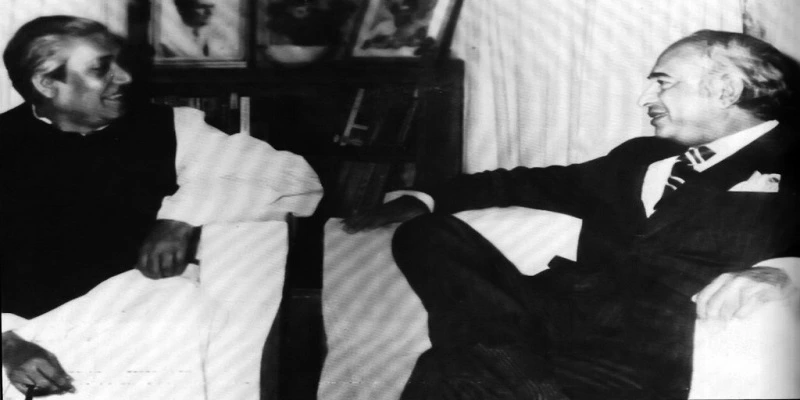
The formation of Bangladesh as an independent nation in 1971 was a pivotal moment that fundamentally transformed the geopolitical landscape of South Asia. This event not only marked a profound tragedy and turning point for Pakistan but also redefined the relationship between the two countries. Pakistan’s eventual recognition of Bangladesh in 1974, following significant political and diplomatic turmoil, underscored the necessity of adaptability, effective governance, and unity in addressing national crises.
The issue of Bengali autonomy in Pakistan dates back to the nation's inception in 1947. When Pakistan was created, it was meant to serve as a homeland for Muslims, but the geographical and cultural divide between East and West Pakistan soon became apparent. East Pakistan, with its predominantly Bengali-speaking population, had very different cultural, linguistic, and economic characteristics compared to the western half, which was more ethnically diverse and centered around Urdu-speaking populations. These differences were the beginning of a long-standing tension between the two regions.
The lack of political power for the Bengalis became a significant issue in the years that followed. Despite East Pakistan being the more populous of the two provinces, the political power remained concentrated in the West, leading to feelings of marginalization and resentment among the people of East Pakistan. In 1948, the issue of language played a significant role in the division between the two wings of Pakistan. The Pakistani government declared Urdu as the sole national language, which caused significant unrest among the Bengali-speaking population in East Pakistan. This was seen as an attempt to undermine their cultural identity, and in 1952, a series of protests in East Pakistan, known as the Language Movement, turned violent, marking the first major confrontation between the people of East Pakistan and the government in the West.
Despite these longstanding tensions, the demand for provincial autonomy did not subside; instead, it grew stronger throughout the 1950s and 1960s. During this period, the Awami League, a political party based in East Pakistan and led by Sheikh Mujibur Rahman, emerged as the primary voice of the Bengali people. It championed greater autonomy and political power, culminating in the Six-Point Movement of 1966, which demanded significant political and economic autonomy for East Pakistan. However, these demands were largely rejected by the central government, leading to increasing dissatisfaction in East Pakistan.
The situation reached a boiling point in 1970 when general elections were held in Pakistan. The Awami League won a landslide victory in East Pakistan, securing 160 out of 162 seats allocated to the region in the National Assembly. However, despite their overwhelming electoral victory, the Awami League was denied the opportunity to form the government. This act of political exclusion, along with the government in West Pakistan's subsequent refusal to transfer power, led to widespread unrest in East Pakistan.
The political deadlock led to widespread protests and civil disobedience in East Pakistan. On March 7, 1971, Sheikh Mujibur Rahman delivered a historic speech calling for non-cooperation with the government in West Pakistan. This speech is often regarded as a pivotal moment in the struggle for independence. The Pakistani government responded by sending military forces to East Pakistan to suppress the protests, leading to widespread violence and the beginning of the Bangladesh Liberation War.
The Pakistani military’s brutal crackdown on East Pakistan, known as Operation Searchlight, resulted in significant loss of life and forced millions of Bengalis to flee the region. The violence prompted a declaration of independence by Sheikh Mujibur Rahman on March 26, 1971, and the formation of the People’s Republic of Bangladesh. This marked the beginning of the war for independence, with the Pakistani military fighting against Bengali Mukti Bahini (Liberation Army) forces, as well as receiving support from the Indian military.
The conflict continued throughout 1971, with India eventually intervening militarily in December to support the independence movement. The Indian military intervention, combined with the Bengali resistance, resulted in the defeat of Pakistani forces in East Pakistan. On December 16, 1971, the Pakistani military surrendered, and Bangladesh was officially recognized as an independent nation.
The aftermath of Bangladesh’s independence was a profound shock to Pakistan. The loss of East Pakistan was not only a blow to the territorial integrity of the country but also to its national identity. Faced with this new reality, Pakistan’s initial response was characterized by denial and resistance. For many in Pakistan, especially the ruling elites, the idea of accepting Bangladesh as a separate nation seemed inconceivable, as it signified a perceived failure of governance and diplomatic strategy.
Pakistan’s reluctance to recognize Bangladesh was partly due to its immense political and emotional investment in maintaining the country's unity. The ruling elite in Pakistan, led by President Yahya Khan and later by Prime Minister Zulfiqar Ali Bhutto, continued to insist that East Pakistan was a part of Pakistan, despite the undeniable fact that Bangladesh had become an independent nation. The government’s position was also influenced by nationalistic sentiment, as many Pakistanis viewed the secession of East Pakistan as a betrayal and a threat to the very foundation of the state.
At this stage, growing international pressure, especially from Muslim countries, started to challenge Pakistan’s position. The Islamic world, which had previously been united in support of Pakistan during the 1971 war, began urging Pakistan to recognize Bangladesh. This shift became particularly evident during the 1974 Islamic Summit held in Lahore, where leaders of six Arab and Muslim countries gathered to discuss the situation in the Middle East after the 1973 Arab-Israeli War.
The summit became a crucial platform for Pakistan to salvage its diplomatic standing. Under pressure from the other members of the Organization of Islamic Cooperation (OIC), including Saudi Arabia, Iran, and Egypt, Pakistan was forced to acknowledge the reality of Bangladesh’s independence. The summit served as a diplomatic breakthrough, as it allowed Pakistan to begin the process of recognizing Bangladesh without losing face in the eyes of the Muslim world. On February 22, 1974, Zulfiqar Ali Bhutto officially recognized Bangladesh, making Pakistan one of the last countries to do so.
The recognition of Bangladesh by Pakistan in 1974 was a pivotal moment in the history of both nations. It marked the beginning of a new chapter in their relationship, one that would eventually lead to more cordial relations. The recognition of Bangladesh allowed the country to become a member of the United Nations, further cementing its status as an independent nation on the global stage.
This new phase in diplomatic relations between the two countries was significant for several reasons. Most importantly, it created opportunities to address unresolved issues left by the 1971 war, such as the repatriation of prisoners of war, the division of assets, and the fate of displaced populations. Previously sources of tension, these challenges could now be handled in a more structured and diplomatic context.
Second, Pakistan's recognition of Bangladesh opened the door to future cooperation and dialogue. Over time, both countries would engage in various diplomatic initiatives aimed at fostering better relations. The recognition also allowed Pakistan to refocus its foreign policy and improve its standing in the international community, particularly in the Muslim world.
The recognition of Bangladesh by Pakistan in 1974 highlighted the importance of diplomacy, internal unity, and effective governance. The failure to resolve the tensions between East and West Pakistan in the years leading up to 1971 resulted in the loss of East Pakistan and the creation of Bangladesh. The events leading to the independence of Bangladesh were a direct consequence of Pakistan’s inability to address the grievances of the Bengali people and the lack of a coherent and inclusive political strategy.
In the years since, both Pakistan and Bangladesh have had their share of challenges. However, Pakistan's recognition of Bangladesh was an important step toward healing the wounds of the past and laying a foundation for future relations. The lessons learned from the Bangladesh crisis continue to shape the region's political and diplomatic landscape.
For Pakistan, the recognition of Bangladesh was a moment of reckoning. It demonstrated the importance of maintaining internal unity, being sensitive to the aspirations of all its people, and being open to diplomatic solutions. For Bangladesh, the recognition by Pakistan validated its independence and set the stage for its growth as a sovereign nation. The relationship between the two countries, though complicated, holds the potential for future cooperation and mutual respect.
In conclusion, Bangladesh's recognition in 1974 marked the end of a tumultuous chapter in the history of the subcontinent. It was a crucial step in normalizing relations between Pakistan and Bangladesh and serves as a reminder of the importance of diplomacy, unity, and understanding in resolving conflicts. Both countries have moved on from the events of 1971, but the lessons of that time continue to inform their policies and interactions on the world stage.