
Sir Creek Water Dispute Bridging Gaps for Lasting Indo-Pak Diplomacy
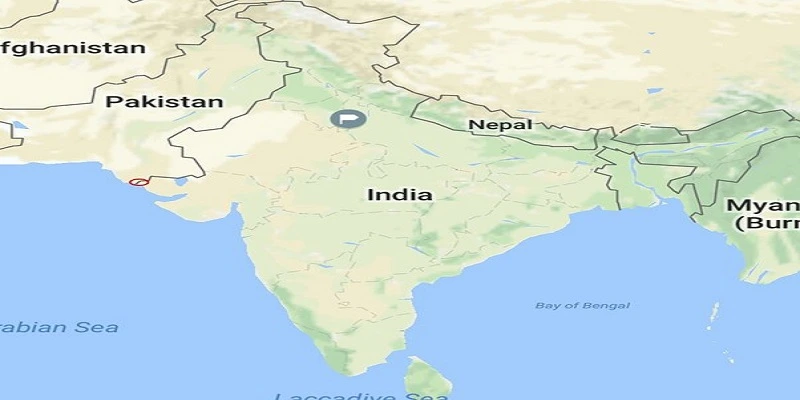
The Sir Creek dispute is a significant yet often overlooked water conflict between India and Pakistan, located in the Rann of Kutch, which extends 60 miles and flows into the Arabian Sea. This creek serves as a boundary that separates India’s Kutch region and Pakistan’s Sindh region. Positioned near the coordinates 23°58'N, 68°48'E, Sir Creek has been at the heart of a long-standing territorial dispute between these two nations. This conflict, which dates back to the partition of India and the subsequent separation of Kutch from Sindh, remains unresolved despite numerous attempts at mediation.
The initial request to resolve the issue of Sir Creek came during the time of the rulers of Sindh and the Rao of Kutch. Kutch, which was once part of Sindh, became part of the Bombay Presidency following the partition of India in 1947. The delineation of the boundaries of these two territories was initially outlined in a resolution that aimed to define the limits of Sir Creek, marking a portion that lies within Sindh and another portion located east of the creek’s eastern end. This boundary line was known as the “Green Line,” a term that has since become synonymous with the ongoing dispute.
The Green Line, however, has been contested by India, which has created its own version of the boundary called the “Indicative Line,” often referred to as the "ribbon line" in technical terms. Alongside the Green Line, Pakistan has also declared its own “Red Line,” while India has countered this with a “Black Line” that defines undisputed parts of the region. This complex network of lines continues to fuel the dispute, as both nations assert their control over the area, which remains crucial for various geopolitical reasons.
A core aspect of this dispute is the differing legal interpretations concerning the division of water boundaries. India has strongly supported the application of the Thalweg Doctrine, an international law principle stating that a river or water body may be divided along its mid-channel, provided both nations agree on the division. India argues that the Sir Creek is navigable, even under high tide conditions, and that fishermen from both nations use the creek for travel and access to open waters. On the other hand, Pakistan has opposed the Thalweg Doctrine, arguing that Sir Creek is not navigable and therefore does not qualify under the law. Pakistan, however, acknowledges the 1925 map that shows the disputed territory but has refused to formally apply the Thalweg Doctrine.
The matter is complicated further by the fact that Pakistan does not wish to adhere to the Thalweg Doctrine due to the implications it would have on the division of land, potentially resulting in significant territorial losses for Pakistan. The conflicting interpretations of the creek’s navigability and the legal status of the Thalweg Doctrine have thus prolonged the dispute. Despite this, both nations acknowledge the importance of the region, particularly in terms of the resources beneath the sea, such as potential gas and oil reserves. These resources add an economic dimension to the dispute, as both India and Pakistan have an interest in tapping into the region's potential wealth.
The strategic importance of Sir Creek was highlighted during the 1965 Indo-Pakistan War, when a skirmish was fought in the region in April of that year. However, despite the military confrontation, a tribunal was established later in the same year to attempt a peaceful resolution. British Prime Minister Harold Wilson played a key role in a verdict that awarded Pakistan approximately 35 square miles of territory in the region. Despite this decision, tensions continued, with incidents like the MiG-21 incident in August 1999, when an Indian naval aircraft was reportedly shot down in the Sir Creek area, further exacerbating the situation.
While the Sir Creek dispute may not hold the same prominence as the Kashmir conflict, it remains a point of contention between the two nations. The dispute centers on the administrative delimitation of the area, as well as the allocation and demarcation of boundaries. Both sides have proposed various solutions over the years, but these proposals have been repeatedly rejected by the other side. Each proposal appears to be viewed as an attempt to gain an upper hand, resulting in stagnation in the peace process.
The Sir Creek issue, while not as high-profile as some other territorial disputes, plays a significant role in the broader context of Indo-Pakistani relations. The failure to resolve the matter has contributed to ongoing tensions between the two countries. The dispute is emblematic of the broader issues that exist between India and Pakistan—issues that are marked by a lack of trust and an unwillingness to compromise.
Despite the numerous attempts to resolve the issue since 1969, the dispute remains unresolved. There has been little progress in the negotiations, and each failure has led to further entrenched positions on both sides. The Sir Creek issue, like many other disputes between India and Pakistan, underscores the need for a new approach. The solution may not lie in one grand political move, but rather in incremental steps toward dialogue and understanding.
The resolution of the Sir Creek dispute has the potential to serve as a model for future negotiations between India and Pakistan. If the issue is resolved through mutual agreement, it could pave the way for greater cooperation in other areas, such as trade, water-sharing agreements, and security cooperation. The stakes are high, not only for the two countries directly involved but also for regional stability and global peace.
While the solution to the Sir Creek dispute is still elusive, the need for compromise and cooperation is clear. Both India and Pakistan must recognize that the benefits of resolving the issue far outweigh the consequences of maintaining the status quo. A solution could foster goodwill between the two nations and serve as a stepping stone toward broader peace initiatives. It is time for both governments to set aside their rigid positions and work towards a future where the residents of the region can live in peace, free from the shadow of conflict.
While the Sir Creek dispute may seem minor, its resolution could yield significant benefits for regional peace and cooperation. India and Pakistan should prioritize resolving this issue, as doing so can foster trust and pave the way for broader collaboration.