
Operation Brasstacks and the Fragile Security Dynamics Between India and Pakistan
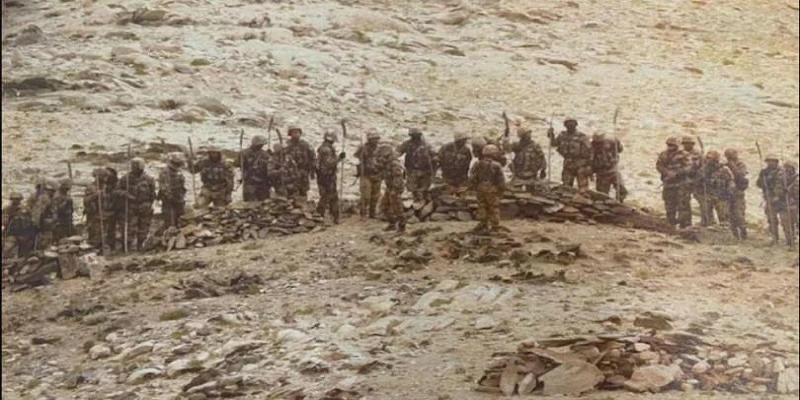
The rift between India and Pakistan is deeply rooted in history, with its origins tracing back to the partition of British India in 1947. This partition, which divided the subcontinent along religious lines, was followed by one of the bloodiest migrations in history, resulting in the murder and displacement of hundreds of thousands of people. This violent chapter laid the foundation for decades of conflict and mistrust between the two nations. Against this background, the legacy of events like Operation Brasstacks demonstrates how unresolved historical disputes and mistrust continue to shape security dynamics and the nuclear-armed rivalry in South Asia.
India and Pakistan have fought three major wars, in 1947, 1965, and 1971, with each conflict ending without the resolution of the underlying issues. These wars only deepened the animosity and mistrust between the two nations. Despite the numerous attempts at peace, the conflict over Kashmir remains a flashpoint for war, and both countries have maintained large military forces along their shared borders. This longstanding animosity has created an atmosphere of skepticism and heightened military preparedness, making any military exercise or move in the region a potential trigger for war.
One such flashpoint occurred in 1986-87, when India conducted a massive military exercise near the Pakistan border in Rajasthan, codenamed Operation Brasstacks. This operation, which involved over 250,000 soldiers, armored vehicles, and air force units, was intended as a test of India's military capabilities. However, the timing and scale of the exercise were perceived by Pakistan as a provocative move, and tensions between the two nations soared.
Operation Brasstacks was the brainchild of General K. Sundarji, then Chief of Army Staff of the Indian Army. The exercise was designed to simulate a large-scale offensive near the Rajasthan border and to test the Indian military's readiness for a potential conflict with Pakistan. The massive military buildup in such close proximity to the Pakistani border immediately raised alarm bells in Islamabad, leading to widespread concerns about the possibility of a full-scale war.
Though the Indian government claimed that Operation Brasstacks was merely a routine military exercise, Pakistan viewed it as an attempt to intimidate and provoke. The scale and scope of the exercise, coupled with its proximity to the volatile Kashmir region, made Pakistan fear that India might be preparing for a military strike. As a result, Pakistan responded by mobilizing its own military forces, further escalating the situation.
The political context behind Operation Brasstacks cannot be overlooked. The exercise was not just about military readiness; it was also about exerting pressure on Pakistan. At the time, Pakistan was providing support to separatist insurgents in India's Punjab state, where Sikh militants were pushing for an independent Khalistan. India accused Pakistan of fomenting unrest in its territory, and Operation Brasstacks was seen as a way to send a strong message to Pakistan to stop supporting the rebels.
For Pakistan, the situation was complicated by its involvement in the Soviet-Afghan War. Pakistan had been providing covert support to the Afghan mujahideen fighters, and the ongoing conflict with the Soviet Union had drained Pakistan's resources. Engaged in a "hit-and-flee" strategy against the Russian forces, Pakistan could not afford to open a new front with India. In response to the growing tensions, Pakistan opted for diplomatic channels rather than military confrontation.
In the wake of the military mobilizations, diplomatic efforts intensified. The United States and other Western nations, concerned about the potential for a catastrophic war in South Asia, intervened to ease the tension. Through diplomatic backchannels, they managed to convince India to de-escalate the situation. In February 1987, both countries took steps to reduce the military standoff, and the immediate risk of war subsided.
For Pakistan, the diplomatic resolution provided temporary relief. However, the impact of Operation Brasstacks was far-reaching. The exercise and the subsequent standoff prompted Pakistan to accelerate its nuclear weapons program. Faced with the possibility of war with a much larger neighbor, Pakistan felt the need to develop nuclear deterrence capabilities. This period marked a turning point in Pakistan's nuclear strategy, as it sought to ensure that it could deter any potential Indian aggression.
The outcome of Operation Brasstacks also contributed to the nuclearization of South Asia. India and Pakistan, both emerging as nuclear powers in the 1990s, began to focus heavily on their nuclear arsenals in response to the tensions exacerbated by military standoffs like Brasstacks. In India, the secrecy surrounding its nuclear program led to growing domestic tensions, particularly within the defense ministry, as the government faced increasing pressure to maintain transparency and accountability in its defense policies.
In both countries, the result was a dramatic increase in arms acquisitions and defense spending. This arms race, combined with the growing stockpiles of nuclear weapons, set the stage for the further destabilization of the region. The fear of mutually assured destruction, while acting as a deterrent to direct conflict, also created an environment of perpetual tension and insecurity, where any miscalculation or provocation could lead to catastrophic consequences.
At the heart of the India-Pakistan conflict lies the issue of Kashmir. The disputed region has been the source of three wars and countless skirmishes between the two countries. It remains the most sensitive and volatile issue in their bilateral relations, with both nations claiming Kashmir in its entirety. While the international community has attempted to mediate and broker peace on several occasions, a lasting resolution to the Kashmir dispute has remained elusive.
The legacy of Operation Brasstacks serves as a stark reminder of the fragility of peace in South Asia. Both India and Pakistan are nuclear-armed nations, and the risk of a catastrophic war remains ever-present. The failure to resolve key issues, particularly the Kashmir dispute, continues to fuel mistrust and animosity between the two countries. Ultimately, Operation Brasstacks illustrates how deeply rooted historical issues and persistent mistrust drive ongoing security challenges, making comprehensive resolution and committed dialogue essential for lasting peace.
The lack of trust between India and Pakistan has been a major obstacle to peace. The historical events that have shaped their relations, from partition to the wars and military standoffs like Operation Brasstacks, have left deep scars. However, despite these challenges, many believe that there is still hope for peace. Political leaders from both countries must show the determination and resolve to address the underlying issues that fuel the conflict. A breakthrough in the Kashmir dispute, along with improved diplomatic relations, could provide the foundation for a more stable and peaceful South Asia.
If the political leadership in both countries can rise above historical grievances and focus on the well-being of their people, there is a chance for a future where events like Operation Brasstacks are a thing of the past. Only through sustained dialogue, mutual respect, and the resolution of long-standing disputes can India and Pakistan hope to build a peaceful and prosperous future.