
Iraq War Chronicles Saddam's Mythic Fall & Pakistan's Strategic Shift
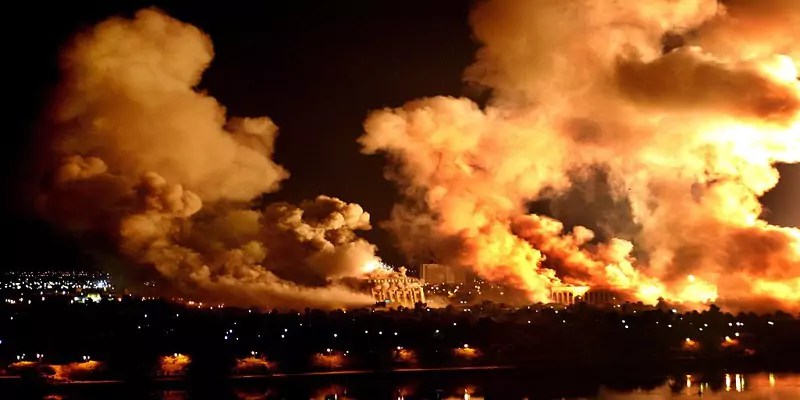
In 2003, the world witnessed the start of the Iraq War, also officially known as Operation Iraqi Freedom. This conflict began when a coalition of forces from the United States, the United Kingdom, Poland, and Austria, among other countries, launched a large-scale invasion of Iraq. The primary objective was to overthrow the regime of Saddam Hussein, which they accomplished in just 21 days of intense combat operations. The removal of Saddam Hussein marked the end of a regime that had long oscillated between harsh reality and the myths surrounding its power and influence in the region. His rule, characterized by authoritarian control and aggressive foreign policy, had left Iraq in a state of tension and unpredictability for decades.
The roots of the conflict can be traced back to the 1990 invasion of Kuwait by Iraq. Saddam Hussein’s army swiftly occupied Kuwait within a matter of hours, creating a sudden international crisis. This aggressive move led to Operation Desert Storm, a multinational military campaign led by the United States, which successfully liberated Kuwait. The invasion also triggered severe UN sanctions, imposing restrictions on Iraq diplomatically, economically, and militarily. These sanctions, enforced by the international community, were designed to pressure Saddam Hussein into compliance with global norms and ensure regional stability. The political landscape of the Middle East was deeply influenced by these events, and countries like Pakistan were drawn into the aftermath, particularly following the transformative events of 9/11.
The attacks of September 11, 2001, reshaped global geopolitics and firmly placed Pakistan as a frontline ally of the United States in the fight against terrorism. Following 9/11, the US-led invasion of Afghanistan sought to dismantle terrorist networks that had taken root there. Pakistan’s strategic location and cooperation with the United States positioned it as a critical partner in this campaign. This alliance also influenced subsequent decisions regarding Iraq, especially with the US claims that Saddam Hussein was developing weapons of mass destruction (WMDs). These claims, though heavily debated, became the primary justification for the invasion of Iraq in 2003, ultimately leading to the swift downfall of Saddam Hussein’s regime.
Examining the historical context, Saddam Hussein’s rule was characterized by ambitious goals and persistent tension between myth and reality. His vision aimed to establish Iraq as a dominant power in both the Persian Gulf and the broader Arab world. In 1963, his political party released a pan-Arab charter advocating for collective Arab defense and the elimination of foreign intervention in the Gulf region. This ideological stance inevitably set Iraq on a collision course with the United States and other Western powers. Despite possessing a strong and formidable military, Saddam often overestimated his ability to achieve rapid victories. He anticipated that conflicts, including the Gulf War and later confrontations, could be resolved within weeks. In reality, the Iraq-Iran War, which lasted eight years, demonstrated how miscalculations and overconfidence shaped his approach to both domestic governance and foreign policy.
The invasion of Kuwait on August 2, 1990, was a pivotal moment in Saddam Hussein’s history. Iraqi forces captured Kuwait in just six hours, sending shockwaves throughout the region and the global community. This event marked one of the most significant territorial aggressions since World War II. In response, the United States and its allies launched Operation Desert Storm, forcing Iraq to withdraw from Kuwait. The UN Security Council condemned Iraq’s actions, while the Arab League also denounced the invasion. Comprehensive sanctions were imposed to prevent any transactions with Iraq by member states, and countries, including the US, Japan, and members of the European community, froze Iraqi assets. Ground troops and air units were deployed to protect Saudi Arabia and maintain regional security. Pakistan’s position during this period reflected its foreign policy priorities. Iraq’s secular and nationalist approach clashed with Pakistan’s regional interests, and as a result, Pakistan aligned with the US-led coalition, contributing troops to the multinational effort.
The post-9/11 era significantly shaped Iraq’s fate. The global war on terror shifted priorities, placing Pakistan at the forefront as a strategic partner of the United States. Pakistan’s cooperation in Afghanistan demonstrated its willingness to support American objectives, both militarily and diplomatically. The US cited Iraq’s alleged possession of weapons of mass destruction as a further reason to take decisive action. While these claims sparked international debate, they became the basis for launching Operation Iraqi Freedom in 2003. Within just 21 days, the coalition forces succeeded in toppling Saddam Hussein’s government, ending decades of authoritarian rule.
Saddam Hussein’s regime had long been a mix of perceived strength and underlying vulnerability. His aggressive foreign policies, including attempts to dominate the Gulf and influence the Arab world, were matched by internal political suppression and military misjudgments. The rapid collapse of his government following the US-led invasion highlighted the discrepancies between the myth of invincibility he projected and the reality of Iraq’s weakened state. Internationally, the removal of Saddam Hussein was framed as a strategic effort to eliminate the threat of WMDs and stabilize the region. For Pakistan, supporting this campaign reinforced its alliance with the United States, securing economic and military backing at a time of global uncertainty.
The Iraq War also reflected broader geopolitical shifts. The conflict demonstrated how regional ambitions, global security concerns, and alliances intersected in the early 21st century. Saddam Hussein’s earlier military campaigns, from the invasion of Iran to the annexation of Kuwait, set the stage for his eventual downfall. The world’s response, particularly through operations like Desert Storm and Iraqi Freedom, revealed the intricate balance of power and the importance of international coalitions in addressing security threats. Pakistan’s active role underscored the country’s strategic significance in supporting US-led initiatives, particularly in the post-9/11 world, where counterterrorism became a central priority.
By 2003, the US and its allies had effectively dismantled Saddam Hussein’s regime. The invasion of Iraq was justified on the grounds of eliminating weapons of mass destruction, though these claims were later heavily scrutinized. Regardless, the operation marked the end of one of the most notorious regimes in modern Middle Eastern history. Pakistan’s support throughout this period not only strengthened its relationship with the United States but also positioned it as a key player in regional security dynamics. The events surrounding the Iraq War, from Saddam’s initial rise to power to his ultimate removal, provide critical insights into the complexities of global politics, the consequences of military aggression, and the role of alliances in shaping international outcomes.
The Iraq War, also known as Operation Iraqi Freedom, was a pivotal moment in modern history. Saddam Hussein’s regime, rooted in ambition and myth, ultimately fell due to coordinated international intervention. The post-9/11 geopolitical landscape brought Pakistan into a crucial partnership with the United States, emphasizing the importance of alliances in the fight against terrorism. The rapid military operations, international sanctions, and strategic diplomacy all contributed to the downfall of Saddam Hussein and reshaped the Middle East in ways that continue to influence global politics today. The invasion of Iraq remains a reminder of the interplay between regional ambitions, global security concerns, and the realities of military power in the 21st century.