
CENTO Navigating Cold War Alliances in the Middle East
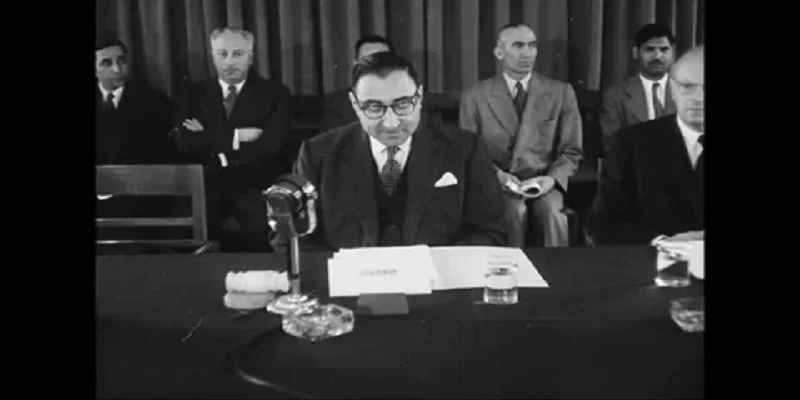
The Central Treaty Organization (CENTO), previously known as the Middle East Treaty Organization or Baghdad Pact Organization, was established between 1955 and 1959 and comprised Turkey, Iran, Pakistan, Iraq, and Britain. Turkey and Iraq were the initiators who established the basis of the Baghdad Pact for mutual defense and security. The Pact was signed on 26 February 1955. Pakistan invited Turkey and Iraq to join, but Pakistan did not want to join and was not eager to join without the support of the United States. However, the pressure from Britain and the United States was a sufficient stimulus for Pakistan to agree to the Baghdad Pact on 23 September 1955, alongside Britain and Iran. The United States was unwilling due to the treaty's implications in the event of war between Israel andthe Arab states. Although the U.S. functioned as an observer in a non-official capacity for the treaty, the United States signed individual agreements with all the nations that were part of the Pact.
In reality, America actively contributed to the market operated by different countries in the Pact. However, the absence of official U.S. participation weakened the chance of attracting other nations. In 1958, Iraq faced a revolution, which led to the dissolution of the pact between Iraq and the other countries. The Baghdad Pact's original name was the Middle East Treaty Organization (METO), which was later changed to the Central Treaty Organization (CENTO) following Iraq's disengagement. Following the expulsion from Iraq of the Baghdad Pact, CENTO moved its headquarters to Turkey (Ankara).
Similar to the North Atlantic Treaty Organization (NATO), CENTO aimed to bring countries together to provide security and ensure non-interference in each other's internal affairs. The aim was to take over the Soviet Union (USSR) by having a group of powerful states that straddled its southwestern border. Additionally, it was referred to as the "Northern Tier" to deter Soviet involvement in the Middle East. In contrast to NATO, CENTO did not have a military command in a collective or organization, nor did it have numerous U.S. or U.K. military bases established in each member nation.
The participants had different goals for the Pact. Iraq believed in the Pact as a means to justify its power source and demonstrate its loyalty to the West, while also seeking to sever diplomatic relations with Moscow in January 1955. For Pakistan, the Pact was intended to help balance relations with India and support its efforts to benefit from the Western economy. As far as it is concerned, Iran was keen to join the West after giving up its policy of a third power and ignoring the research of Prime Minister Mosaddeq and a neutralist stance. Even though there was a particular concern about the Soviet and Communist threat, he saw a significant shift in the alliance to ensure his administration's security. The United States was not join in this Pact. However, she was in contact with it since the Pact was signed during the Cold War, when the U.S. sought to dismantle Communism (USSR). The U.K. also aspired to reduce the influence of the USSR in the Middle East and sought dominance in the region. Created at the request of Britain and the United States, the Central Treaty Organization was created to combat the danger to Soviet expansion into large Middle East oil-producing regions.
There have been developments in the Middle East during this period that have weakened the Pact. In 1956, Egyptian President Gamal Abdel Nasser was able to take control of the Suez Canal, an essential international water channel. Israel retaliated by invading the Sinai Peninsula, and British and French forces resisted. The consequence of this war was profound because there was a loss in British reputation throughout the Middle East, then diminished its leadership position within the Baghdad Pact. As with other incidents in 1958, such as the Egyptian-Syrian Union, an Iraqi revolution, and civil injustice in Lebanon, these events diminished the region's stability. In response to the events and the resulting instability, the United States invoked the 1957 "Eisenhower Doctrine" as justification for its intervention in Lebanon. Members of the Baghdad Pact, except Iraq, acclaimed the U.S. intervention. These were the events that led to the demise of CENTO.
The primary goal of CENTO was to counter the influence of the USSR and Communist incursions, as well as to ensure security and defense for the entire group. However, CENTO has never provided its members with a guarantee of security and defense goals for the entire group. CENTO was not successful concerning Pakistan in either 1965 or 1971. Did CENTO contemplate assisting Pakistan while Pakistan was already a member to find an equalizer to India? It was apparent that South Asia and the Middle East were extremely unstable and weak during the 1960s due to ongoing Indo-Pakistani wars and the Arab-Israeli conflict. CENTO was hesitant to get heavily involved in either conflict. In 1965 and 1971, Pakistan unsuccessfully tried to gain support for its wars against India from CENTO. However, this was rejected since it was thought that CENTO was designed to contain the USSR rather than India.
The Iranian Revolution was a significant factor in the collapse of the organization in 1979. Along with Iran, Pakistan also left CENTO. A sudden withdrawal from Pakistan and Iran in 1979 led to the disintegration of the Central Treaty Organization (CENTO). In brief, it is evident that the Baghdad Pact, which led to the establishment of CENTO, aimed to break the deadlock in the USSR's presence in the Middle East; however, it ultimately proved unsuccessful. Each country had its national interest in CENTO. However, they still need to collectively meet their objectives and goals.